
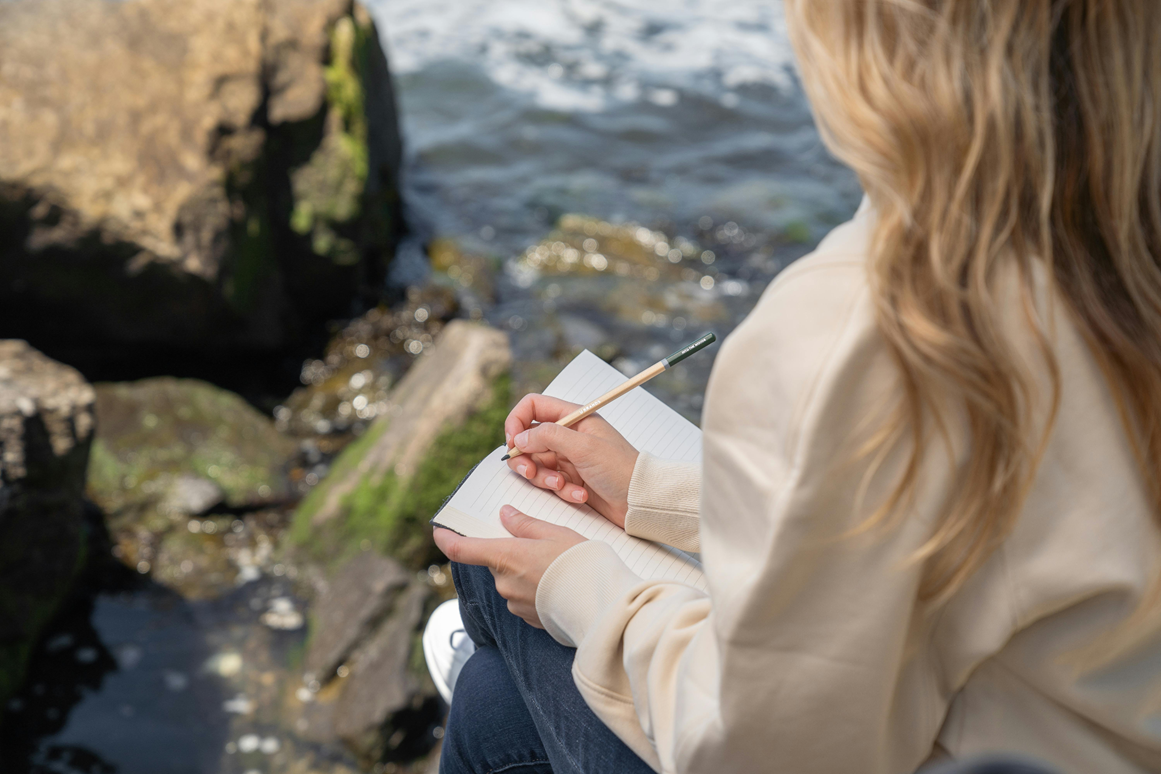
Photo credit: Kevin Malik
Fighting Writer’s Block
As a creative writer, sometimes it can be exhausting to continue to find things to be creative about. Sometimes, we run out of poems to compose, stories to tell, memories to dig up from the dusty corners of our minds.
Many writing guides will tell you to overcome writer’s block by going outside, taking a stroll, or just having a cup of tea on your porch. But why? Is there something about nature that makes our brains work? And how can writers capitalize on this source of inspiration?
Nature & Your Brain

Photo Credit: Adobe Stock
According to this study, being outdoors can give your brain a sort of boost in creativity. This happens as a result of what’s called Attention Restoration Theory, which tells us that being out in nature helps our brain recover from the activities that our fast-paced, online society demands.
Writing in nature can also increase your emotional vulnerability, assisting with your creative endeavors. This is linked to the Self Efficacy Theory, people’s belief that they can control the course of their lives. A study compared an indoor writing course with one that had been supplemented with outdoor activities like snowshoeing and found that people who did these outdoor activities were more comfortable being vulnerable.
When it comes to facing the challenges of our own minds and experiences, we can practice by spending time doing adventurous activities. This essentially gives our brain time to “warm up,” and trust itself to be emotionally open because we feel in control of our lives.

Photo Credit: Adobe Stock
So what? We know that doing things outside gives our brains time to decompress from the internet and gives us confidence. But how do we get from the studies to the pages? The word document will stay empty if all we do is talk about how our brains process information.
Let’s Talk Strategies
“The Artist Date”
Julia Cameron’s The Artist’s Way has been one of the most popular books on how to get more creative and give yourself a fresh start. Included in this extremely helpful book is “The Artist Date.” This involves taking yourself, just yourself, out somewhere to observe, immerse, and decompress.
“We will go work on our creativity, but we won’t necessarily go play on our creativity, and playing is absolutely necessary”
— Julia Cameron, Creative Teacher & Author of The Artist’s Way
This is a practical way to use the Attention Restoration Theory (ART) and the Self-Efficacy Theory that we talked about earlier. Unplug, take yourself on a creative date in nature. Going for a stimulating activity like a hike will give you the confidence and the restoration that your creative mind might be looking for.
Outdoor Observation
Combatting writer’s block has a lot to do with finding ideas as well, and doing some creative writing exercises in the great outdoors can give that push you need to get started.

Try this sensory exercise:
Get a notebook and a writing utensil and find a comfortable place outside.
Spend 5 minutes with your eyes closed (trust yourself, and me), noting the sounds, smells, and atmosphere around you.
Spend 5 minutes writing all of the things you noticed
Make something out of it!
Photo Credit: Adobe Stock
This exercise gives you a chance to use your other senses besides your visual, applying that ART theory again. It also stimulates your brain to think in a new way, rerouting yourself out of a blocked state.
It doesn’t matter what you make out of it, and it might be a terrible piece of poetry, a bad essay, or a nonsensical fiction story. What matters is combining nature and your brain to get out of your creative rut.
The Classic Nature Walk
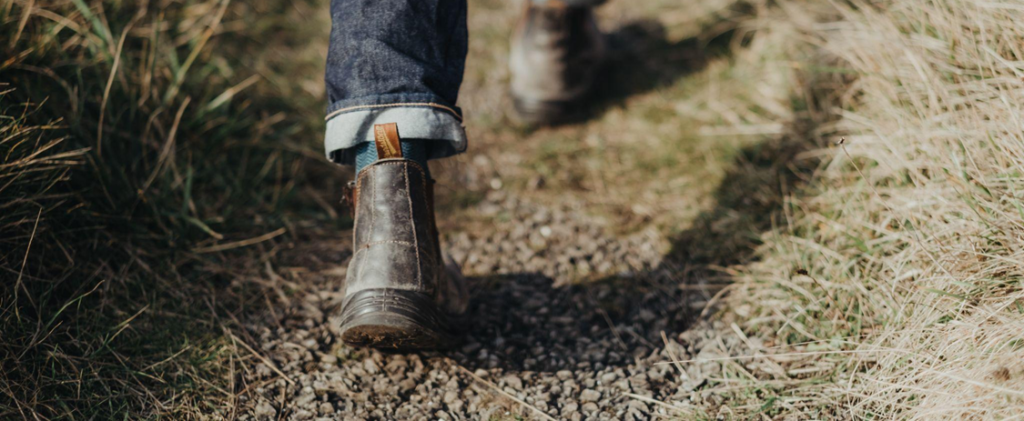
Photo Credit: Adobe Stock
There cannot be a conversation about writing and nature without talking about the classic nature walk. Going for a walk is a textbook way to feel more creative. Not only is this because of our new best friend, Attention Restoration Theory, but it also has a lot to do with the walking motion itself.
A Stanford study found that walking boosts creativity by up to 60% compared to sitting. Without getting into the weeds too much, going for a walk in your brainstorming session before sitting down to write can have a residual effect on your creative capacity and doing so outside will boost that impact more than a walking treadmill, or pacing, for example. However, any walking is better than no walking, and the study suggests that walking leads to “novel idea generation,” meaning that it’s perfect to unblock your writing brain.
Escaping Writer’s Block
When it comes to writer’s block, it’s important to remember that your brain is more than capable of escaping it, with a bit of help. Trying one of these exercises and activities is a great way to kickstart your inspiration and start fresh.