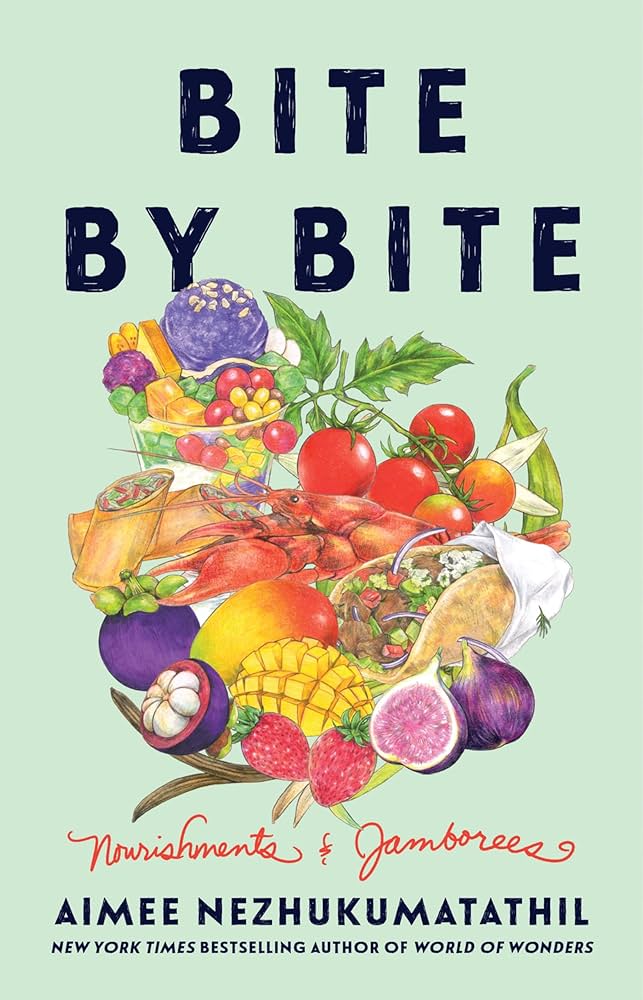
When we (The Broken Plate staff) were told that we’d have to come up with a lesson plan and execute it in a little under a month, I was nervous. I’m not an education major, or ever even considered it, but nevertheless it was an opportunity to connect with young writers and inspire them to create something they were proud of. Zines turned out to be the perfect way to get the Great Achievers of Muncie to interact with the Muncie Public Library’s chosen Big Read book, Bite by Bite, by Amy Nezhukumatathil, in an impactful, personal way.
The book is a collection of short nonfiction essays that connect food with identity, culture, and memory: all themes that anyone at any age can relate to. I personally saw a lot of myself and my family in Nezhukumatathil’s sentences, and maybe that’s because we’re both from ethnic minority cultures in the US, but regardless, everyone can relate to trying a food for the first time. Especially younger students who have more recent memories of trying new things, since most everything is new for them. The Broken Plate staff partnered with the 3rd through 5th grade classes of the Great Achievers program who seemed excited about meeting new people with new activities to do. Some needed more coaxing into participating than others, but that’s to be expected, so we catered our discussion and activity with them in mind.
Zines by nature are very creative. You can choose whatever topic, and whatever medium you wish. There’s digital and handmade, there are fanzines, informational zines, and everything in between, so they were perfect for our needs. There are plenty of resources online, like Barnard’s Zine Library, to learn more about them. Most importantly, zines are personal. They reflect a small part of their creator, their passions, and interests, which is how Nezhukumatathil writes about food. If food, creativity, and writing are all ways to show others who you are, then of course we’d want our students to engage with all three at once.
To make it easier on the students, we split our lesson in two parts, with the first part consisting of the actual content going into the zines, and the second consisting of being creative and putting them together. We focused on an essay from the book, “Lumpia,” which was about a sleepover where all the young narrator wanted was for her mother to serve their guests “normal” food, instead of the traditional Filipino birthday dish lumpia. We asked the kids a series of questions about special birthday foods and activities to get them thinking about food as a part of identity. We then partnered with them and had them fill out worksheets with questions about family and friends’ favorite foods. Students wrote acrostics, and they created their own stories (my partner created the character “Barry the Banana” who loves jump-roping). For our second lesson, our team leaders helped students make paper backgrounds, with doodles, stickers, and drawings that students then folded into a zine booklet. Each scribble, sticker placement, and messy word was thought out and reflected the personality of the little fingers that made them.
I went in expecting the students to disregard most of what we were saying (why would they want to write after school?), but it was really awesome to see them open up and so readily talk about their encounters with food. They weren’t just participating, they were excited. Many of them talked with their peers to find out that that they had similar food stories, despite the fact that their families came from different histories and backgrounds. They were sharing more than markers, scissors, and glue sticks: they were sharing in the creation of zines, and they were sharing in the feeling of being heard and understood through what they were reading and writing about food and memory.
Working with the Great Achievers not only helped the students we were teaching, but it helped our class (or at least me personally) remember that reading isn’t just understanding the text. It’s about connection and finding characters like ourselves represented in stories. It’s also about writing our own stories, in hopes that what we share will mean something to someone.